
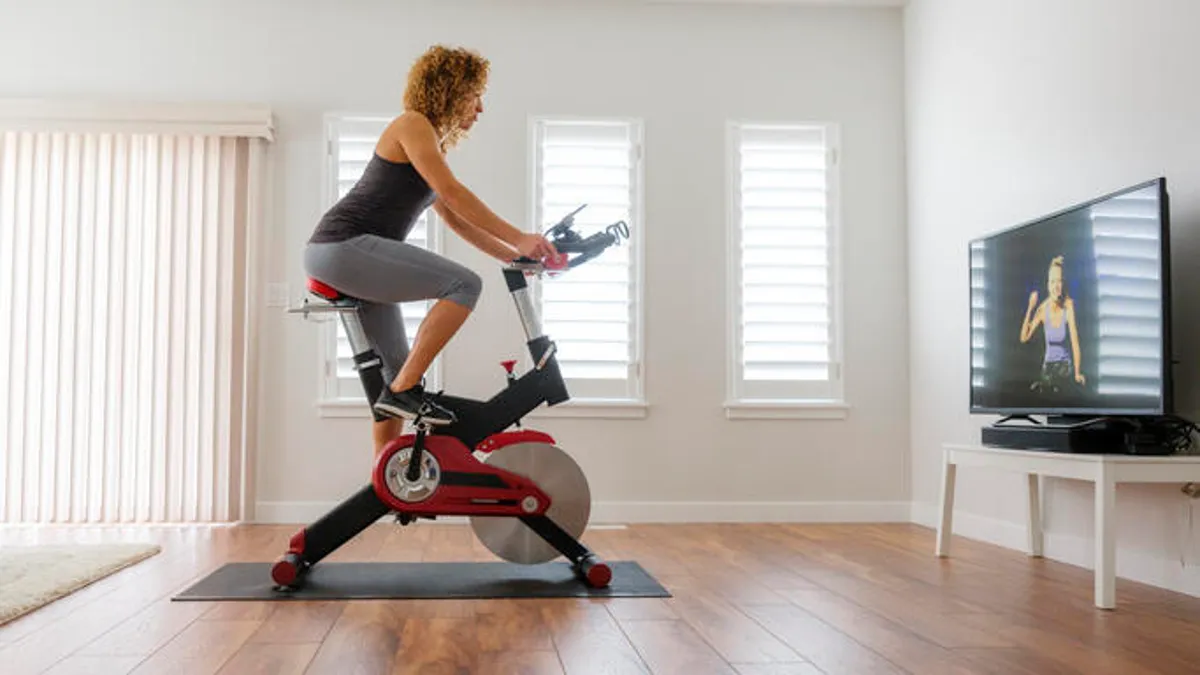

The home exercise bike had its moment. During the period when access to gyms and fitness studios was restricted globally, stationary bikes and online cycling platforms became the default solution for people who wanted to maintain cardiovascular fitness without leaving their homes. In Singapore, a city where apartment living is the norm and space is genuinely limited, a significant number of fitness enthusiasts made meaningful financial investments in home cycling setups ranging from entry-level stationary bikes to high-specification smart bikes connected to interactive training platforms.
Several years on from that period, an interesting pattern has emerged. Many of those home bikes now sit largely unused. Their owners are back in spin studios, booking indoor cycling Singapore classes several times per week, and when asked why they made the switch, the reasons go beyond simple boredom with home training. They speak to something more fundamental about what makes a fitness habit sustainable and genuinely effective over the long term.
The Home Gym Boom in Singapore and What Happened Next
The initial appeal of the home exercise bike for Singapore residents was straightforward. No commute, no booking system, no waiting for a class slot, and the ability to train at any hour without leaving the climate-controlled comfort of home. For a city where commuting times add meaningful friction to every out-of-home activity, this convenience case was genuinely compelling.
What the home bike decision frequently underestimated was the role that external structure plays in driving actual exercise behaviour. The availability of equipment is not the same as the motivation to use it. When the bike is always there, ready to be used at any moment, the psychological urgency that drives action is significantly reduced. It can always be ridden later, or tomorrow, or at the weekend. The absence of a booked class at a specific time, with other people attending and an instructor expecting participants, removes the social and logistical architecture that makes exercise a reliable behaviour rather than an aspiration.
Research on exercise adherence is consistent on this point. The most reliable predictor of whether someone actually exercises on any given day is not their motivation level, their fitness goals, or their ownership of equipment. It is whether they have a specific, scheduled appointment to do so, with social accountability attached to that appointment.
The Real Cost of Home Cycling Equipment in Singapore
The financial comparison between home cycling and studio membership is rarely as straightforward as it initially appears. The upfront cost of a quality home exercise bike in Singapore ranges from a few hundred dollars for a basic magnetic resistance bike to several thousand dollars for a smart bike with an interactive screen and access to a premium online cycling platform subscription.
When the true total cost of a home setup is calculated, it typically includes the bike purchase price, any subscription fees for online cycling platforms, cycling shoes if the bike uses a clipless pedal system, a mat to protect flooring, a fan or additional cooling solution because Singapore apartments can become genuinely hot during intense exercise even with air conditioning, and occasional maintenance costs for the equipment itself.
Amortised over two to three years of realistic use, the monthly cost of a reasonably equipped home cycling setup is often comparable to, and sometimes exceeds, the cost of a mid-range spin studio membership in Singapore, particularly when that membership includes access to the full range of class formats and multiple locations.
The critical difference is that the studio membership provides all of the additional benefits of the studio environment on top of the cycling itself, including professional instruction, social accountability, varied programming, and the psychological benefit of a dedicated training space that is separate from the domestic environment.
What You Actually Lose When You Train Alone at Home
The gap between a home cycling session and a studio spin class is not simply one of social atmosphere, though that gap is real and significant. It also encompasses instruction quality, programming sophistication, and the physiological impact of training with and against others.
Professional instruction is perhaps the most immediately impactful difference. A skilled spin class instructor does not simply call out resistance levels and cadence targets. They monitor the room, identify when participants are flagging and need encouragement, when the pace needs adjusting, and when the energy in the room requires a different approach. They cue proper technique in real time, which is particularly important for preventing the joint stress and biomechanical errors discussed in detail elsewhere. And they create an experience that is emotionally engaging, not just physically demanding.
Online cycling platforms that provide virtual instructor-led sessions on home bikes partially address this gap, but the fundamental dynamic of a live instructor responding to the specific people in front of them, rather than a recorded session performing to an imagined average participant, creates a qualitatively different experience that most home cyclists report they cannot fully replicate virtually.
Programming variety is another significant home training deficit. Most home cyclists, even those using sophisticated online platforms, gravitate toward a relatively narrow range of session formats and instructors over time. Without the social friction of booking a class and showing up, the temptation to replay familiar favourites rather than challenge yourself with formats that push into uncomfortable territory is difficult to resist. Studio programming, where the schedule is determined externally and participants choose from what is on offer rather than designing their own experience, naturally introduces more variety than most individuals impose on themselves.
The Group Energy Factor: A Physiological Reality
The performance-enhancing effect of training in a group is not simply motivational anecdote. It is measurable and has been studied extensively in exercise psychology research. The phenomenon, sometimes referred to as the Kohler effect, describes the tendency of people to perform better on physically demanding tasks when doing so alongside others than when performing the same task alone, particularly when they can see others’ efforts and feel accountable to the group.
In a spin class context, this effect manifests as higher sustainable intensity, longer sustained efforts before discomfort causes backing off, and a willingness to push through demanding segments that solo training often cannot match. When the person on the bike next to you is grinding through a hill climb with visible determination, your own resolve is measurably reinforced by their example. When the instructor calls the group through the final sprint and everyone in the room accelerates together, the collective energy creates an experience of effort that most people cannot self-generate alone in a home studio.
This is not a trivial performance difference. Over weeks and months of training, consistently reaching higher intensities during sessions, even marginally higher, produces meaningfully better cardiovascular and physical adaptation than consistently stopping short of those intensities in the absence of the social and competitive stimulus of a group environment.
Professional Bike Setup and Coaching: A Safety Advantage
The biomechanical case for studio training over home training is often overlooked in discussions of home versus studio cycling, but it is genuinely important for long-term joint health and injury prevention.
At a spin studio, an experienced instructor can assess your bike setup at the beginning of a session and make adjustments that prevent the accumulated joint stress of incorrect positioning. For home cyclists, particularly those who set up their bikes initially without expert guidance and have continued to ride in that position ever since, the risk of having been training in an ergonomically compromised setup for an extended period is significant.
The signs of incorrect home bike setup are often subtle and gradual. Knee ache that you attribute to training volume. Lower back tightness that you manage with stretching. These discomforts are frequently the early warning signals of setup errors that a studio instructor would identify and correct immediately. Left unaddressed in a home training context, they often progress into chronic conditions that require physiotherapy and training interruption to resolve.
When a Home Bike Makes Sense and When It Does Not
A home exercise bike is genuinely useful in specific circumstances. For individuals with very limited availability for scheduled classes due to shift work, caregiving responsibilities, or other commitments that make fixed appointment-based exercise difficult, having a home bike as a supplementary training tool alongside studio sessions has real value. For rehabilitation purposes under physiotherapy guidance, a home bike provides accessible low-intensity movement without the intensity demands of a studio class. And for experienced cyclists who have already developed sound technique and who use home sessions to maintain aerobic base between studio class attendance, the home bike serves a legitimate and well-defined purpose.
Where the home bike consistently underdelivers is as the primary or sole training tool for people who want to see meaningful and sustained fitness progression. The absence of instruction, social accountability, programming variety, and the physiological benefits of group training means that home-only cyclists rarely reach the same performance levels or maintain the same consistency as those who attend structured studio classes.
Making the Switch: What to Expect in Your First Month at a Studio
For home cyclists making the transition to regular studio spin class attendance, the first few sessions often come with a surprise: the class is harder than expected, even for those who consider themselves reasonably fit from home training. This is almost entirely attributable to the group energy and instructor guidance driving you to intensities that your solo home sessions did not reach, not to any deficiency in your fitness.
Within two to three weeks of regular studio attendance, most people who have been home cycling find that their performance in class improves noticeably as their bodies adapt to the specific demands of group-format, instructor-led training. The social environment also begins to feel familiar and genuinely enjoyable rather than novel or slightly uncomfortable, which is when the habit formation that drives long-term consistency begins to take root.
TFX Singapore offers a free trial session for new visitors, which provides the ideal low-commitment entry point for home cyclists who want to experience the studio environment before deciding whether to transition their primary training there.
FAQ
Is a spin studio membership worth it if I already own a stationary bike at home?
For most people, yes, particularly if the home bike is not being used as consistently or as intensively as intended. The studio membership provides instruction, accountability, programming, and the group training effect that home equipment cannot replicate. If you find your home bike being used fewer than three times per week, or if you feel your fitness has plateaued despite regular home sessions, a studio membership is very likely to deliver better outcomes.
What is the approximate cost difference between a home setup and a studio membership in Singapore?
A quality smart home bike with a platform subscription typically costs between two thousand and four thousand Singapore dollars upfront, plus ongoing monthly subscription fees. A mid-range spin studio membership in Singapore typically ranges from one hundred to two hundred dollars per month depending on the facility and membership tier. Over a two-year period, the total cost of both options is often similar, which means the decision becomes less about cost and more about which delivers better results and consistency.
Can I get the same calorie burn at home as I would in a studio spin class?
Theoretically yes, if intensity is matched precisely. In practice, most home cyclists train at lower average intensity than they reach in a studio class due to the absence of the group energy and instructor-driven motivation. Studio classes typically push participants to higher sustained intensities than solo home training, which means calorie expenditure per session is generally higher in the studio context even when both sessions have the same nominal duration.
What makes a group spin class more motivating than riding alone at home?
Multiple mechanisms contribute, including the Kohler effect where you perform better alongside others, social accountability to your booking and to familiar class members, instructor motivation that responds to the real-time energy of the room, and the psychological separation of a dedicated training space from the domestic environment. The home setting is associated with rest and relaxation, which can work against the mental shift into training mode that the studio environment supports naturally.
How do I know if I am ready to transition from home workouts to a studio class?
If you can sustain a moderate to vigorous cycling effort for thirty to forty-five minutes at home, you have the baseline fitness to attend a spin class safely and participate meaningfully. Spin classes accommodate a range of fitness levels because each participant controls their own resistance, so there is no fitness threshold that must be reached before attending. Starting with a moderate-intensity class format rather than a maximum-intensity session for your first few studio visits is a sensible approach regardless of your home training background.

Comments are closed.