
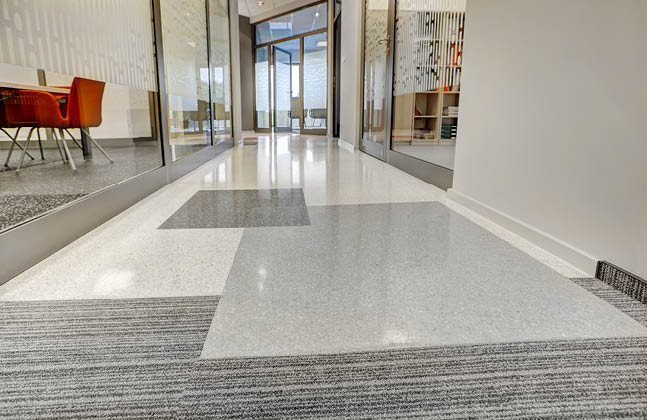

Commercial environments continue to evolve into multi-functional hubs. A single building may host offices, hospitality areas, retail zones, and social or leisure spaces. As these functions overlap, sound control has become a critical design requirement, not just an optional enhancement. Flooring is one of the most influential yet overlooked components in managing acoustics across commercial settings. High-performance acoustic flooring systems create quieter, more productive environments while improving comfort, privacy, and user satisfaction.
The Rising Need for Acoustic Flooring in Modern Architecture
Modern commercial designs favor open floor plans, glass partitions, tall ceilings, and hard surfaces. While visually appealing, these choices amplify sound travel. Without proper acoustic treatment in flooring, issues arise such as:
-
Distracted employees and reduced productivity in offices
-
Poor guest experience in hotels and conference centers
-
Noise transfer between retail floors and residential units above
-
Reduced focus in educational facilities and libraries
In multi-use spaces, flooring must do more than just look good—it needs to work as an acoustic barrier.
Key Acoustic Concepts to Understand
To evaluate acoustic flooring effectively, it helps to understand two performance measurements:
Airborne Sound Control (STC Rating)
Sound Transmission Class (STC) measures how well a floor system blocks airborne sounds like speech, music, or traffic. Higher STC numbers mean better sound containment between rooms or floors.
Impact Sound Control (IIC Rating)
Impact Insulation Class (IIC) measures how well a flooring system reduces noise created by footsteps, moving chairs, or dropped objects. A high IIC value indicates strong vibration absorption and quieter floor performance.
Optimal acoustic flooring solutions balance both STC and IIC, ensuring noise does not disturb occupants in adjacent or lower spaces.
High-Performance Flooring Materials Designed for Acoustic Control
Acoustic flooring systems often combine multiple layers and materials. Below are the leading material technologies shaping modern acoustic floor solutions.
1. Rubber Underlayments
Rubber is one of the most widely used sound-dampening underlayment materials due to its density and elasticity.
Key Advantages:
-
Excellent absorption of impact noise
-
Long lifespan without performance degradation
-
Compatible with hardwood, tile, laminate, and vinyl flooring
Rubber is particularly effective in multi-story commercial buildings with heavy foot traffic such as shopping malls, coworking centers, and airports.
2. Cork Composite Underlayment
Cork contains micro air cells that naturally absorb sound. It offers a soft, warm feel underfoot and serves as a renewable, eco-conscious option.
Best Applications:
-
Hospitality corridors
-
Yoga and wellness studios
-
Boutique retail spaces
Cork also supports green building certifications, making it appealing for sustainability-focused projects.
3. Acoustic Luxury Vinyl Tile (LVT)
Acoustic LVT incorporates built-in sound backing, reducing installation layers while improving comfort and durability.
Why Designers Choose It:
-
Fast and clean installation
-
High resistance to wear in commercial traffic
-
Broad aesthetic variation to match brand identity
This makes acoustic LVT a top choice for modern office suites and mixed-use business spaces.
4. Floating Modular Subfloor Systems
Floating floors sit atop resilient mounts, creating a separation between the walking surface and building structure. This prevents sound vibrations from transferring through the slab.
Ideal For:
-
Auditoriums
-
Performance venues
-
High-end residential developments above retail spaces
This is the most effective method for preventing noise travel between stacked building functions.
Strategic Placement of Acoustic Flooring in Commercial Design
To maximize efficiency, acoustic flooring should be prioritized in spaces where sound transfer will have the greatest impact.
Corporate Offices
Acoustic flooring reduces distraction in open offices, conference rooms, and collaborative lounges, supporting better focus and speech intelligibility.
Hotels and Short-Stay Facilities
Guests expect quiet environments. Sound control under carpets, LVT, and tile prevents disturbances from hallways and above-floor activity.
Healthcare and Wellness Centers
Noise affects patient recovery and stress levels. Soft acoustic flooring supports calm, therapeutic environments.
Educational and Training Buildings
Libraries, lecture halls, and study rooms benefit from noise-reducing flooring to improve concentration and communication clarity.
Common Mistakes to Avoid When Implementing Acoustic Flooring
Even the best materials can underperform when installed incorrectly. Some common pitfalls include:
-
Skipping acoustic testing during specification
Always request STC and IIC test data that reflects real structural assemblies. -
Ignoring subfloor conditions
Uneven subfloors reduce contact and compromise sound absorption integrity. -
Choosing materials solely for aesthetics
Flooring may look impressive but fail acoustically if not engineered for sound isolation. -
Overlooking mechanical noise sources
HVAC vibrations can travel structurally if flooring does not integrate vibration isolation layers.
A successful acoustic flooring strategy requires balancing design, performance, and functional use.
The Long-Term Value Proposition of Acoustic Flooring
Investing in high-performance acoustic flooring may cost more initially, but the operational benefits deliver long-term ROI:
-
Higher tenant satisfaction
-
Increased property value and leasing demand
-
Reduced complaints and operational disruptions
-
Improved productivity and well-being in workplaces
When quiet matters, flooring becomes a strategic asset—not just a finish layer.
Frequently Asked Questions (FAQ)
1. Does thicker flooring automatically provide better sound insulation?
Not necessarily. Sound performance depends on material structure, density, and underlayment—not just thickness.
2. Can acoustic flooring work under heavy commercial furniture and equipment?
Yes, as long as the flooring system is rated for load-bearing and compression resistance.
3. Is underlayment always required for acoustic flooring?
Some flooring, such as acoustic-backed LVT, includes built-in sound layers, while others require separate underlayment.
4. Can acoustic flooring be used with underfloor heating systems?
Yes, but material compatibility must be confirmed to ensure thermal efficiency and structural safety.
5. Does acoustic flooring eliminate all noise?
No material eliminates noise entirely, but high-performance systems significantly reduce both airborne and impact sound.
6. How long do acoustic flooring systems last?
With proper installation and maintenance, many commercial-grade acoustic flooring solutions last 10–25+ years.
7. Can acoustic flooring be installed in renovation projects?
Absolutely. Many acoustic solutions are designed for retrofits without requiring major structural changes.

Comments are closed.