
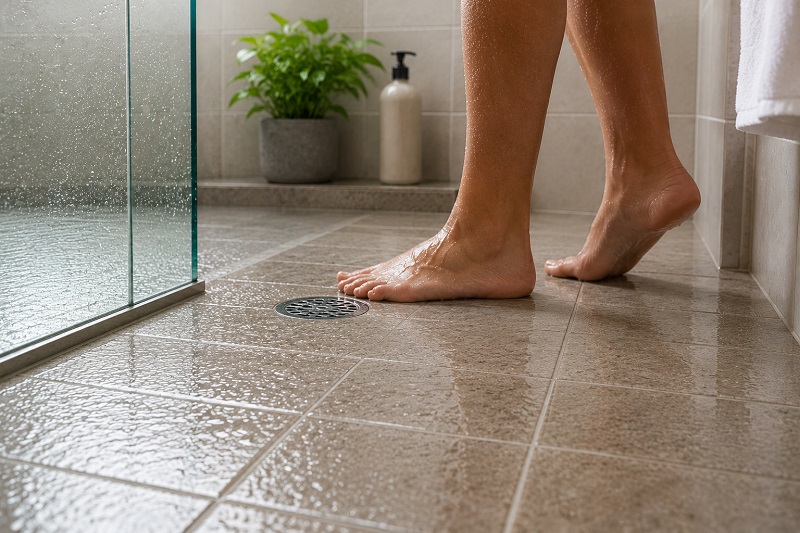

The combination of warm water, body wash, shampoo surfactants, and bare feet creates an environment with almost zero natural traction. In many high-end bathroom renovations, homeowners unknowingly create serious fall hazards by prioritizing showroom aesthetics over floor mechanics. A polished marble slab or large-format glazed porcelain tile may look stunning across a continuous bathroom floor, but once enclosed in a shower and coated with soapy water, it behaves like an ice rink.
Addressing slip resistance during a remodel is infinitely better than attempting retrofits later. Clunky rubber suction mats trap moisture, foster black mold, and ruin the visual lines of a custom shower. Designing safety directly into the layout ensures your shower floor remains secure underfoot while maintaining an upscale, architectural finish.
Understanding Slip Resistance: The DCOF Standard
Choosing the right flooring begins with understanding how traction is measured in wet environments. The tile industry evaluates slip resistance using the Dynamic Coefficient of Friction (DCOF), typically tested under the ANSI A326.3 standard. This rating measures the friction between a moving object and a wet tile surface.
For general interior floors expected to get wet, building codes commonly require a minimum wet DCOF rating of 0.42. However, a shower floor is not a standard interior floor. Because soap, conditioners, and body oils drastically reduce surface tension, experienced designers specify materials with a wet DCOF of 0.55 to 0.60 or higher for dedicated shower pans. When browsing tile samples, look at the manufacturer’s technical specification sheet rather than relying on how the dry tile feels in your hands. A surface that feels mildly textured when bone dry can turn shockingly slick when wet.
The Mosaic Strategy: Engineering Grip with Grout Lines
One of the most reliable ways to guarantee traction without sacrificing high-end design is to use small-format tiles. Instead of relying solely on the texture of the tile surface itself, small tiles use the surrounding network of grout joints to generate physical grip.
Why Small-Format Tiles Work
When you stand on a large 12×24-inch tile, your entire foot rests on a single, continuous sheet of slick glaze. When you stand on a 2×2-inch square mosaic, a 1-inch penny round, or a 2-inch hexagon tile, the ball and heel of your foot bridge across multiple grout joints simultaneously.
These recessed joints act like the tread on an all-weather tire, channeling water away from the contact points and providing mechanical edges for your toes to grip.
Choosing the Right Grout Material
Homeowners sometimes hesitate to install mosaic shower floors because they fear cleaning extensive grout networks. In older bathrooms, standard cementitious grout absorbs body oils, stains easily, and requires frequent sealing.
You can eliminate this maintenance headache by pairing mosaic tile with epoxy or high-performance urethane grout. Unlike traditional cement grout, epoxy formulas are completely non-porous. They will not absorb dirty water, resist mold and mildew growth, and never require chemical sealing, giving you the safety benefits of high grout density without the scrubbing burden.
Natural Stone and Mechanically Textured Porcelain
If you prefer the clean look of larger tiles or want to avoid traditional mosaic patterns, you must rely on materials with permanent, built-in physical texture.
Honed and Flamed Natural Stone
Polished natural stones like marble and granite are dangerous choices for a shower pan, but stone finishes can be altered mechanically to provide dependable traction. Honed stone features a satin, matte surface ground flat without a reflective polish, offering significantly better foot grip.
For even greater traction, look to materials like flamed granite or natural cleft slate. Cleft slate splits naturally along structural layers, creating subtle ridges, clefts, and textural variations that naturally catch the sole of the foot. When using natural stone in a shower, apply a high-grade penetrating sealer to protect the porous stone from mineral scaling and soap scum without altering its tactile grip.
Sliced Pebble and River Rock Mosaics
Pebble shower pans provide an earthy, spa-like aesthetic with remarkable traction. The rounded contours of the stones conform naturally to the arches of your feet, creating a gentle massage effect while preventing hydroplaning.
If you choose river rock, select sliced pebbles rather than fully rounded whole stones. Sliced pebbles are cut flat on top, leaving a level plane to stand on while preserving the organic grout channels between each stone. Fully rounded pebbles can create small low spots where soapy water ponds, which can be uncomfortable for sensitive feet over a long shower.
Structured and Embossed Porcelain
Modern porcelain manufacturing can simulate wood grain, poured concrete, and raw slate with extraordinary fidelity. Many tile manufacturers now produce tiles with structured, three-dimensional surfaces designed specifically for wet areas. These tiles feature molded micro-ridges, matte glazes, and anti-slip surface coatings baked directly into the porcelain at high temperatures. These finishes retain their slip resistance permanently and will not wear down from regular foot traffic or domestic cleaning products.
Modern Alternatives to Tiled Shower Pans
Tiling a shower pan is not the only way to achieve a secure, slip-resistant floor. Modern bathroom design frequently utilizes integrated bases and composite materials that eliminate tile entirely.
-
Cast Solid-Surface Bases: Prefabricated bases made from cast mineral composites, engineered stone, or heavy-duty acrylic often feature textured slip-resistant patterns molded directly into the material. Unlike budget fiberglass pans from decades past, modern solid-surface shower pans feel dense, rigid, and substantial underfoot, with a non-glossy, stone-like texture that provides excellent traction while eliminating tile joints altogether.
-
Teak Duckboard Inserts: A removable slatted teak floor insert provides natural slip resistance and high-end warmth. Teak contains high natural oil content that repels water and prevents rot. Water drains instantly between the slats, keeping your feet elevated above the standing stream of wastewater.
The Role of Slope and Drain Configuration
A floor’s slipperiness is often magnified by how water exits the enclosure. If water drains slowly, a thin film pools across the floor, significantly reducing friction between your skin and the tile.
Plumbing codes dictate that shower floors must slope one-quarter inch per foot toward the drain to ensure positive drainage. A traditional center drain requires a compound, four-way slope (often called a bowl or funnel pitch), which restricts your tile choices to small mosaics that can conform to the curve without lippage.
If you want larger, textured tiles on your shower floor, pair them with a linear drain. Linear drains run along one wall, allowing the entire shower floor to slope gently in a single, flat plane. This eliminates the awkward cuts required to shape large tiles around a round center drain, accelerates water removal, and prevents the standing puddles that turn smooth surfaces hazardous.
Designing a safe shower floor does not mean settling for institutional aesthetics. By focusing on certified friction ratings, leveraging the mechanical grip of small-format tiles, or utilizing modern textured porcelain and stone, you can build a bathroom that delivers refined architectural beauty alongside dependable everyday safety.

Comments are closed.