
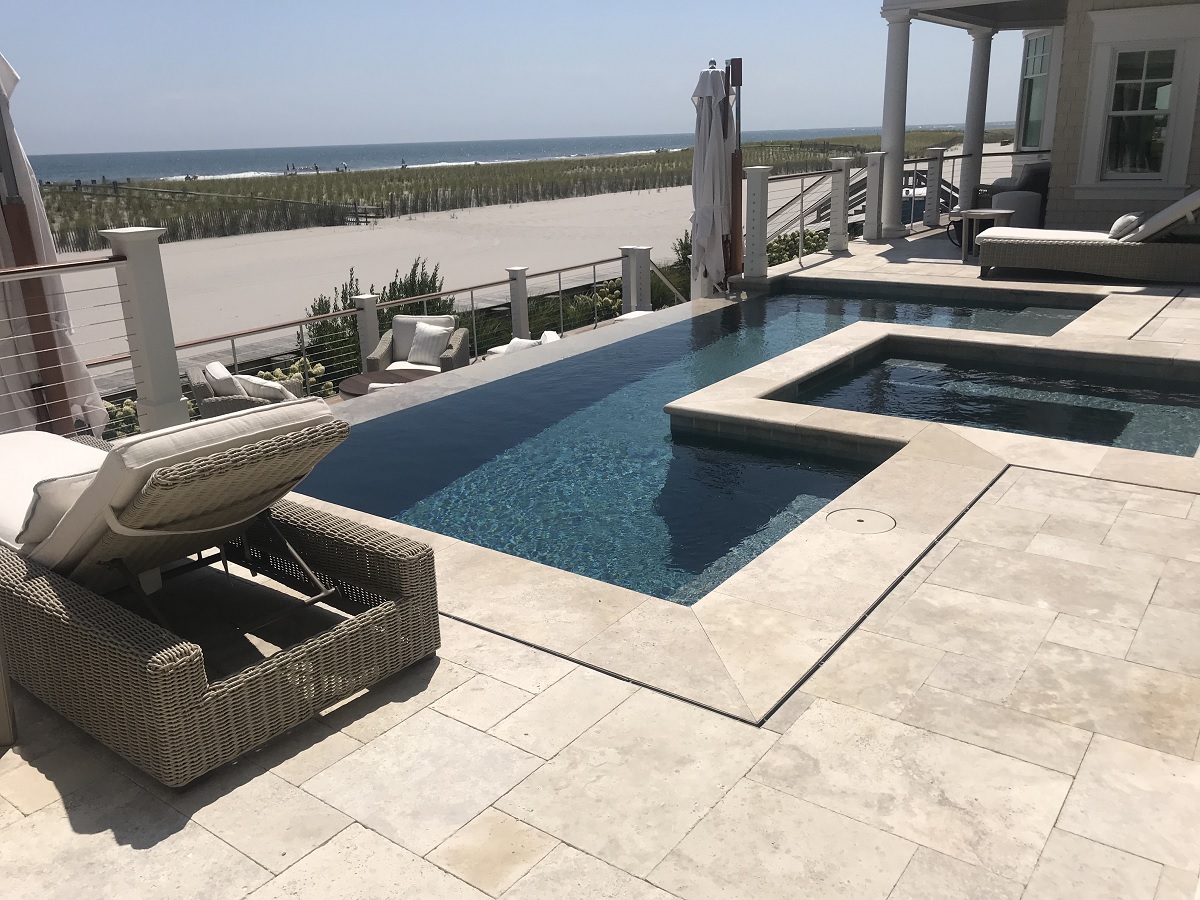

Travertine has been used in architecture for thousands of years — from the columns of ancient Rome to the pool surrounds of contemporary Australian homes. In 2026, it’s experiencing a clear resurgence in residential landscape design, driven by a broader shift away from sterile engineered surfaces and back toward materials with genuine character. If you’re weighing up travertine pavers for an upcoming outdoor project, this guide covers everything you need to make a well-informed decision.
Natural stone selection is a long-term commitment, and travertine in particular rewards buyers who understand both its strengths and its honest limitations. Detailed product guides on travertine pavers — covering finishes, colours, and real installation photography — are worth consulting before you commit, as the visual variation between batches and finish types is significant. What reads as a subtle tone difference in a showroom can look quite different across a 60-square-metre pool deck in full Perth sun.
What Travertine Actually Is
Travertine is a sedimentary limestone formed by the rapid precipitation of calcium carbonate around mineral springs. As spring water flows over and through the forming stone, it creates the signature cellular texture — the natural voids and channels that give travertine its distinctive appearance and thermal properties. It’s quarried primarily in Turkey, Italy, and Iran, cut to specification, and classified by origin, cut direction, and surface treatment.
Unlike concrete or porcelain, no two travertine slabs are identical. The variation in tone, veining, and hole distribution is inherent to the material — and in the current design climate, that individuality is a selling point rather than a drawback. For buyers coming from engineered paving products, this natural variation requires a small mindset shift: you’re selecting a natural stone, not ordering a consistent manufactured tile.
The Four Surface Finishes and When to Use Them
Travertine comes in four primary finishes, each suited to different applications and aesthetic preferences.
Tumbled is the most widely used finish for Australian outdoor installations. The stone is tumbled with abrasive media, which rounds the edges, roughens the surface, and creates a naturally worn appearance. Unfilled tumbled travertine retains its natural voids, which improves grip and drainage — making it particularly suited to pool surrounds, pathways, and any area exposed to wet foot traffic.
Honed describes a stone that has been ground flat and smooth to a matte finish. Holes are typically filled with grout or resin for a cleaner aesthetic. Honed travertine suits contemporary alfresco areas and covered entertaining zones. It requires slightly more maintenance vigilance, as the smooth surface shows marks more readily than tumbled alternatives.
Brushed finishes are produced by wire-brushing the stone, opening the surface grain to create visible texture without the rustic informality of tumbled. It’s a strong choice for pathways, steps, and transition zones where moderate grip is needed alongside a contemporary aesthetic.
Polished travertine, while visually striking, is primarily an indoor specification. In outdoor Australian conditions, a polished surface becomes a safety risk when wet and will dull under UV exposure over time.
Travertine Around the Pool: Why It Works in Australian Conditions
Pool deck specification in Australia is governed by three priorities: heat management, slip resistance, and chemical compatibility. Travertine performs credibly on all three, which explains its consistent popularity for residential pools across the country.
The stone’s porous cellular structure means it absorbs and dissipates radiant heat rather than re-radiating it upward. On a hot summer afternoon, travertine can run 20–30% cooler underfoot than a comparable dark concrete or granite surface — a meaningful difference for families who use their pool areas barefoot during peak heat. Light-toned travertine in cream, ivory, or silver tones amplifies this advantage further by reflecting rather than absorbing incident sunlight.
On the slip resistance question, tumbled and brushed finishes provide strong traction when wet without the abrasiveness of exposed aggregate. For pools with coping requirements, travertine can be specified with a bullnose or drop-face edge profile that integrates cleanly with the pool shell.
The chemical compatibility note: travertine is sensitive to acidic environments. Pool water that drifts into low pH territory, or the incidental use of acid-based cleaning products, will etch the stone surface. This doesn’t disqualify travertine for pool use — it simply means pH monitoring and pH-neutral cleaning products are non-negotiable elements of the maintenance plan.
Cost and Value in the Australian Market
Travertine sits in the mid-to-premium range for natural stone paving in Australia. It’s typically more affordable than granite and large-format premium porcelain, while costing more than concrete, brick, and manufactured pavers. Within the travertine category itself, pricing varies significantly by origin (Turkish travertine is generally more accessible than Italian), finish type, and slab thickness.
For homeowners doing whole-of-life cost analysis, travertine often competes favourably with lower-cost alternatives. A correctly installed and maintained travertine surface can last 25–30 years without requiring replacement — substantially outlasting concrete pavers in areas with sandy or reactive soils. The ongoing cost of sealing (every 12–18 months for outdoor applications) is real but modest.
Maintenance: The Honest Version
Travertine’s maintenance requirements are often overstated in competitor comparisons. The core principles are simple: seal on installation, reseal annually or biannually depending on traffic and environmental exposure, clean with pH-neutral products only, and act on spills quickly.
The acid sensitivity is the most important behavioural requirement. Vinegar, citrus, and most commercial bathroom cleaners will permanently etch travertine — dissolving the calcium carbonate in the stone surface and leaving dull, rough patches that can’t be cleaned away. This is a material property, not a product defect. The solution is simply to use the right products.
Travertine in coastal areas will benefit from more frequent rinsing, as salt spray accelerates surface mineral deposits. In areas with iron-rich soils, a penetrating sealer (rather than a topical coating) prevents sub-surface staining that can discolour lighter-toned stones from below.
Understood properly, travertine isn’t high-maintenance — it’s specific-maintenance. Homeowners who approach it with the right products and routine will find it performs reliably for years without drama.
Is Travertine Out of Style in 2026?
The short answer is no. After a decade dominated by polished porcelain and grey concrete, Australian residential design has shifted clearly back toward materials with warmth, texture, and natural variation. Travertine’s organic tonal variation and warm earthy palette align directly with the current preference for outdoor spaces that feel grounded and liveable rather than clinical.
The design narrative around travertine has also matured. Where it was once associated primarily with Mediterranean-style homes, it’s now specified across a wide range of architectural styles — from contemporary minimalist builds to traditional brick veneer homes. Tumbled travertine in particular has proven its versatility across both contexts, adapting to the surrounding palette rather than imposing its own aesthetic.
For Australian homeowners planning outdoor renovations in 2026, travertine represents one of the more future-proof material selections available — a natural stone that has outlasted every design trend of the past century and will almost certainly outlast those of the next.

Comments are closed.