
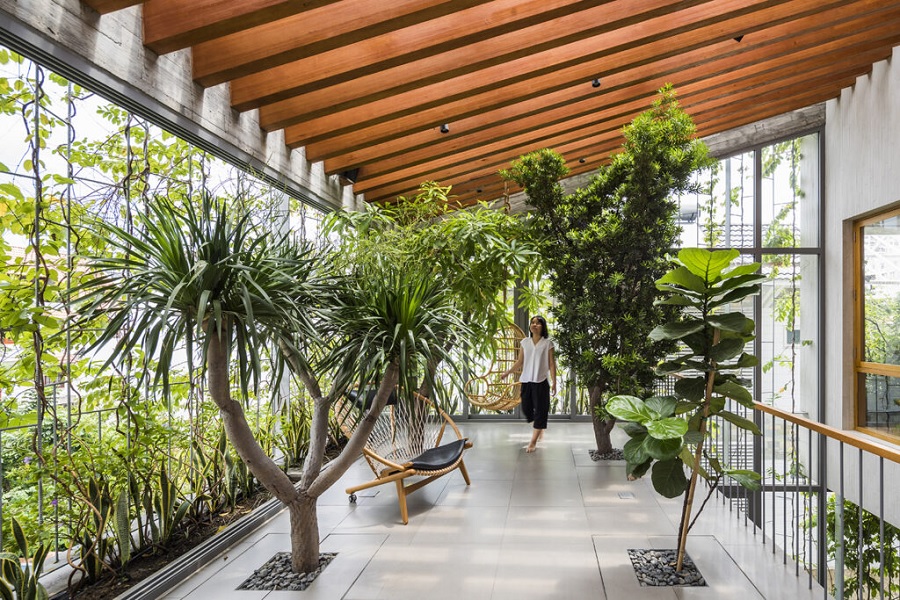

Humans spent the vast majority of their evolutionary history completely immersed in the outdoors, yet the average modern individual now spends roughly ninety percent of their life inside. This profound environmental shift has engineered a quiet, pervasive stress into everyday life. Our nervous systems are simply not designed to thrive under the hum of fluorescent lighting, surrounded by rigid concrete and synthetic drywall. Architecture, historically focused on shielding us from the elements, is now pivoting to address this biological deficit. Biophilic design is the architectural framework that actively bridges the gap between the built environment and the natural world, transforming static buildings into dynamic, living habitats.
The Core Philosophy of Biophilic Design
The term biophilia translates to a love of life and living systems. In the context of architecture, it represents a monumental shift away from viewing nature as a resource to conquer, and toward treating nature as a critical partner in the design process.
This methodology requires moving far beyond the superficial addition of a potted plant in a corporate lobby or a landscape painting in a living room. True biophilic design weaves the physical, visual, and auditory elements of nature deeply into the structural DNA of a space. It operates on the fundamental premise that human physical health, cognitive function, and emotional well-being are inextricably linked to our proximity to natural ecosystems. When a home or office is built with these principles in mind, it ceases to be a mere shelter and becomes an active participant in the occupant’s overall wellness.
Direct Experiences of Nature in the Built Environment
The most impactful execution of biophilic architecture relies on direct sensory contact with the natural elements. By manipulating the physical features of a building, architects can force a daily, unavoidable interaction with the outdoors.
Maximizing Natural Light and Dynamic Illumination
Lighting dictates our biological clocks. Architects are increasingly prioritizing dynamic, natural illumination over static, artificial grids. By utilizing expansive clerestory windows, strategic skylights, and interior glass partitions, daylight is allowed to penetrate deep into the core of a building. This architectural strategy creates a shifting shadow play throughout the day, aligning the occupants’ circadian rhythms with the natural solar cycle. Waking up to the soft, creeping glow of morning light and working through the shifting warm tones of the afternoon drastically reduces midday fatigue and promotes significantly deeper, more restorative sleep at night.
The Integration of Water Elements
The auditory and visual presence of water triggers an immediate parasympathetic nervous system response, actively lowering heart rates and reducing blood pressure. High-end residential and commercial designs incorporate indoor water features to introduce the therapeutic white noise of moving water into otherwise sterile environments. Whether it is a subtle reflection pool in a central atrium, a cascading rain curtain in a primary bathroom, or a shallow channel running through an open-concept living space, moving water naturally humidifies the air while masking the mechanical hum of HVAC systems and urban traffic.
Indoor Greenery and Living Ecosystems
Living walls and vertical indoor gardens have become the hallmark of biophilic interiors. By covering massive interior expanses with dense, living foliage, architects instantly improve indoor air quality through natural filtration. More importantly, these installations provide a massive psychological anchor. Offering the eye a chaotic, organic texture to rest upon after hours of staring at rigid digital screens provides immediate cognitive relief. When a living room features a two-story wall of climbing vines or a kitchen is designed around a mature, enclosed indoor tree, the barrier between the garden and the home is completely dissolved.
Indirect Experiences: Mimicking the Natural World
When direct access to nature is restricted by extreme climates, urban density, or structural limitations, biophilic design relies on biomimicry to trick the human brain into a state of calm. This involves utilizing indirect representations of nature to trigger the same neurological responses as the real thing.
Organic Shapes and Fractal Patterns
Nature rarely produces sharp right angles or perfectly flat, featureless surfaces. Replacing harsh, geometric corners with sweeping, organic curves softens the aggressive posture of modern architecture. From arched doorways and vaulted, curved ceilings to winding staircases that mimic the spiral of a nautilus shell, irregular geometry fosters a deeply soothing environment. Furthermore, designers frequently incorporate fractal patterns—the repeating, complex mathematical shapes found in snowflakes, fern leaves, and tree branches—into acoustic ceiling panels, floor tiling, and window fretwork. The human brain is evolutionarily wired to process these specific patterns effortlessly, which reduces visual fatigue and creates an immediate sense of comfort.
Authentic Materials and Earthy Textures
The tactile experience of a room is just as vital as the visual one. Biophilic spaces heavily prioritize raw, authentic materials over sleek, synthetic imitations. Exposed heavy timber beams complete with knots and imperfections, unpolished stone fireplaces, and natural clay or lime plasters ground a room in reality. The subtle variances in natural wood grain or the rough edge of a slate floor engage our sense of touch, providing a subconscious reminder of the earth. When our hands brush against natural linen wall coverings or bare feet walk across wide-plank oak flooring, the physical feedback is inherently grounding, contrasting sharply with the cold friction of plastic, vinyl, and synthetic laminates.
The Psychological and Physiological Impact on the Human Body
The return on investment for biophilic architecture is measured directly in human performance and health. Decades of environmental psychology research indicate that environments devoid of nature act as a slow, continuous drain on our mental resources.
In corporate environments, spaces engineered with natural light, organic materials, and clear sightlines to the outdoors consistently report higher employee retention, drastically fewer sick days, and a measurable boost in creative problem-solving. The human brain simply does not have to expend baseline metabolic energy fighting off the low-grade anxiety induced by windowless, fluorescent-lit cubicles.
In residential architecture, this translates to a profound sanctuary effect. A home built on biophilic principles actively lowers cortisol levels the moment you walk through the door. It facilitates what psychologists call attention restoration. When we look at a gently swaying tree branch outside a massive window or watch the reflection of water on a stone wall, our minds enter a state of soft fascination. This effortless attention allows the brain’s directed, focused attention mechanisms to rest and recharge, making us more resilient to the cognitive demands of the modern world.
Erasing the Indoor-Outdoor Divide
A massive component of this design philosophy involves erasing the hard physical boundaries of the home. Traditional residential layouts treat the outdoors as a separate entity, accessed through a standard, heavy door. Biophilic homes, by contrast, utilize massive, retracting glass wall systems that fold away entirely, seamlessly merging the interior living room with the backyard terrace.
Outdoor kitchens that flow directly into indoor dining spaces, screened-in sleeping porches, and internal courtyards built into the center of the floor plan pull the elements directly into the daily living experience. By treating outdoor square footage as a functional extension of the primary floor plan, the architecture forces a daily, unavoidable interaction with fresh air, changing weather, and seasonal shifts. You are no longer insulated from the world; you are safely sheltered within it.
The Future of Urban Habitats
As global populations continue to urbanize at an unprecedented rate, the concrete jungle threatens to isolate us completely from the natural environment that originally forged us. Biophilic architecture is not a fleeting interior design trend or a luxury aesthetic; it is a necessary, biologically driven course correction in how we approach urban planning and residential design.
By demanding that our homes, offices, and public spaces act as extensions of the natural environment rather than fortresses built against it, we reclaim our biological heritage. The spaces we inhabit ultimately shape how we feel, how we interact, and who we become. By building the textures, light, and life of nature back into our daily routines, we construct a future that is fundamentally healthier, more resilient, and profoundly more human.

Comments are closed.