
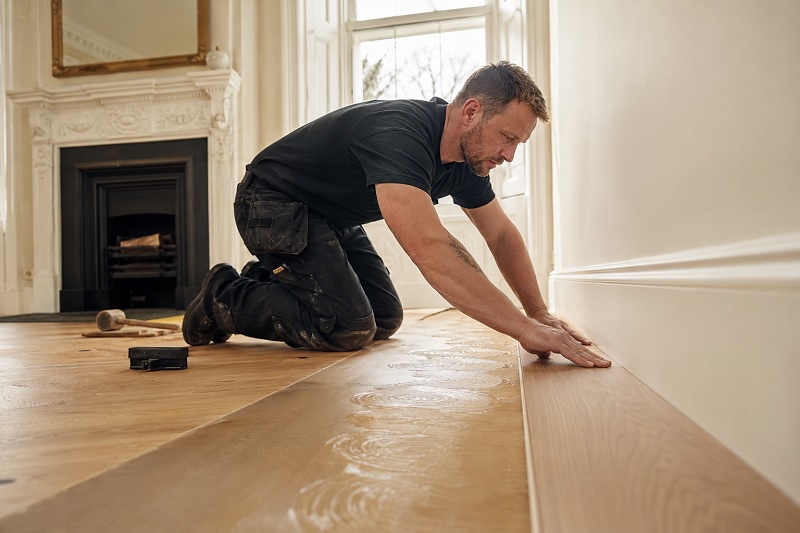

The foundation of any residential interior is quite literal. The flooring material dictates the acoustic profile, the tactile experience, and the overarching visual narrative of a home. For centuries, solid hardwood stood as the undisputed pinnacle of luxury flooring. It was the benchmark by which all other materials were judged. However, as residential architecture has evolved to embrace open-concept layouts, expansive floor-to-ceiling windows, and advanced climate control systems, the physical limitations of traditional solid wood have become increasingly apparent.
Modern properties demand a material that offers the uncompromising beauty of natural timber without the temperamental physical reactions that plague solid planks. This intersection of authentic aesthetics and structural resilience is precisely where engineered wood flooring has claimed its dominance. Understanding why architects, luxury builders, and discerning homeowners are overwhelmingly choosing engineered hardwood requires examining its unique construction, its unparalleled stability, and its adaptability to contemporary living.
The Anatomy of Structural Superiority
To appreciate the benefits of engineered hardwood, one must first dismantle the persistent myth that it is somehow a synthetic or inferior product. Engineered wood is not laminate, nor is it a luxury vinyl plank printed with a photograph of a tree. It is one hundred percent real wood from top to bottom, but it is constructed using advanced manufacturing techniques rather than being milled as a single, thick piece of lumber.
An engineered plank consists of two primary components. The top layer, known as the wear layer or the lamella, is a slice of premium, authentic hardwood. Whether it is European white oak, rich Brazilian cherry, or wire-brushed American hickory, this top layer provides the exact same visual and tactile experience as a solid plank. The structural magic, however, lies beneath the surface. The core of the plank is constructed from multiple layers of high-quality plywood or high-density fiberboard. These layers are stacked and glued under immense pressure with the grain of each layer running perpendicular to the one above and below it.
This cross-directional core construction is the defining triumph of engineered hardwood. Wood naturally wants to expand across its grain when it absorbs moisture and contract when the air becomes dry. By locking these layers in a cross-grain pattern, the natural movement of the wood is severely restricted. The layers actively pull against each other, neutralizing the forces that cause solid wood to warp, cup, or gap.
Dimensional Stability in Demanding Environments
The enhanced structural stability of engineered wood solves several of the most frustrating challenges in modern residential construction. Traditional solid hardwood is notoriously sensitive to its environment. It requires strict humidity control and careful acclimation, making it highly unsuitable for specific areas of a property.
Conquering the Concrete Slab
In many modern builds, particularly in warmer climates, coastal regions, or urban high-rises, properties are constructed on concrete slabs rather than elevated wooden subfloors. Installing solid hardwood directly over a concrete slab is an invitation to disaster. Concrete is porous and continuously emits moisture vapor from the ground. This moisture is absorbed directly into the bottom of a solid wood plank, causing it to swell and cup severely. Because engineered wood’s cross-ply core is highly resistant to moisture fluctuations, it can be glued or floated directly over a properly sealed concrete slab, allowing homeowners to carry a seamless wood aesthetic through modern ground-floor living spaces.
Transforming Below-Grade Spaces
Historically, finishing a basement meant resigning oneself to carpeting, ceramic tile, or synthetic floating floors. Solid wood cannot survive the inherent dampness and humidity shifts of a below-grade environment. Engineered hardwood shatters this limitation. Its dimensional stability allows it to thrive in finished basements, instantly elevating a subterranean space from a casual recreation room to a sophisticated, high-value extension of the primary living quarters.
Seamless Integration with Radiant Heating
Radiant floor heating is rapidly becoming a standard feature in luxury construction. The gentle, ambient warmth rising from the floor provides unmatched comfort during winter months. Unfortunately, placing solid hardwood over a radiant heat source is incredibly risky. The direct, intense heat dries out the solid planks, causing them to shrink, crack, and separate, leaving massive gaps between the boards. Engineered wood handles temperature fluctuations beautifully. The restricted movement of the engineered core allows it to conduct radiant heat efficiently without compromising the structural integrity or visual appeal of the floor.
Uncompromising Design Flexibility
The shift toward open-concept architecture has fundamentally changed how flooring is laid out. Instead of breaking up a floor plan with different materials in the kitchen, dining room, and living room, modern design favors a single, continuous flooring material that visually expands the footprint of the home.
This architectural trend has fueled a massive demand for ultra-wide planks. Today’s homeowners frequently seek planks that are seven, nine, or even ten inches wide to create a clean, contemporary, and expansive look. Attempting to manufacture and install a solid hardwood plank at these widths is highly problematic. The wider a solid board gets, the more susceptible it is to cupping and crowning because there is simply more surface area reacting to moisture.
Engineered hardwood makes the wide-plank aesthetic entirely possible and remarkably stable. The robust core easily supports the tension of a massive wear layer, allowing designers to utilize exceptionally long and wide boards that showcase the sweeping, uninterrupted grain patterns of the wood. Furthermore, engineered flooring is available in every conceivable finish, from heavily distressed and hand-scraped textures that mask daily wear, to ultra-matte, wire-brushed finishes that highlight the raw, organic beauty of the timber.
The Environmental and Economic Equation
Beyond aesthetics and performance, engineered wood offers a highly compelling environmental advantage. Premium, slow-growing hardwoods like oak, walnut, and maple take decades to mature. When a manufacturer mills a solid hardwood floor, a massive amount of this precious timber is used for the unseen structural body of the plank.
Engineered hardwood utilizes resources far more efficiently. By slicing the slow-growing premium hardwood into thinner wear layers and building the thick core out of fast-growing, highly renewable species like birch or plantation-grown eucalyptus, manufacturers can produce significantly more flooring from a single prized tree. This sustainable approach appeals heavily to eco-conscious homeowners and architects aiming for green building certifications.
From a financial perspective, the installation process of engineered wood is generally faster and more versatile. Many engineered products feature advanced click-and-lock milling, allowing the floor to be floated over an underlayment rather than requiring thousands of nails or buckets of expensive adhesive. This reduces the time a specialized installation crew must spend on the property, directly translating to lower labor costs for the homeowner.
Dispelling the Refinishing Myth
The most common hesitation buyers express regarding engineered wood is the assumption that it cannot be sanded and refinished if it gets damaged. While it is true that cheap, paper-thin engineered floors cannot be sanded, premium engineered products are designed for longevity.
A high-quality engineered plank features a wear layer that is three to six millimeters thick. This is enough solid wood to be professionally sanded and refinished at least two or three times over the lifespan of the floor, which is identical to the usable life of a solid hardwood floor. Because modern factory-applied aluminum oxide finishes are exponentially harder and more scratch-resistant than site-applied polyurethane, it will likely be decades before a premium engineered floor ever requires a full sanding.
Elevating a modern property requires materials that balance aesthetic grandeur with high-performance engineering. Engineered wood flooring achieves this balance flawlessly. It provides the warmth, character, and undeniable luxury of natural timber while utilizing modern construction techniques to eliminate the material’s historical flaws. For homeowners navigating the demands of wide-plank designs, concrete subfloors, and varying interior climates, engineered hardwood is not merely an alternative to solid wood; it is the definitive upgrade.

Comments are closed.