
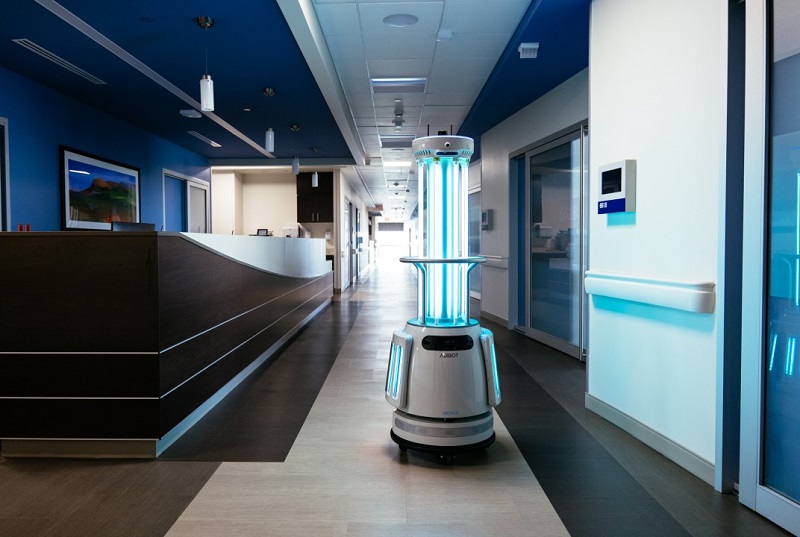

The global push for cleaner, pathogen-free environments has pushed sanitization technology far beyond spray bottles and bleach wipes. Among the most widely adopted innovations is ultraviolet germicidal irradiation, delivered via UV-C cleaning devices. Once confined almost entirely to surgical suites, pharmaceutical cleanrooms, and municipal water treatment plants, UV-C devices now inhabit commercial offices, public schools, airport terminals, and residential living rooms.
Yet as the market has expanded from multi-thousand-dollar clinical robots to twenty-dollar handheld consumer gadgets, widespread confusion has followed. Many consumers and facility managers purchase these devices assuming they act as instantaneous sterilizing wands. The underlying science tells a more nuanced story. UV-C light is an extraordinarily powerful antimicrobial tool, but its real-world effectiveness depends on rigid physical laws: radiant energy, distance, exposure duration, and line of sight.
The Mechanism Behind Ultraviolet Germicidal Irradiation
To evaluate what UV-C devices can and cannot accomplish, one must understand how light destroys living microorganisms. The ultraviolet spectrum occupies the wavelength range between 100 and 400 nanometers, situated just past visible violet light and before X-rays. This spectrum is split into three distinct bands: UV-A, UV-B, and UV-C.
UV-C encompasses wavelengths between 100 and 280 nanometers. Unlike UV-A and UV-B, which penetrate Earth’s atmosphere from the sun, natural UV-C is entirely blocked by the ozone layer. As a result, terrestrial microorganisms never evolved biological defenses against it.
The peak germicidal zone occurs between 254 and 265 nanometers. When bacteria, viruses, or fungal spores absorb light in this range, the high-energy photons break the molecular bonds holding their genetic material together. Specifically, UV-C induces the formation of pyrimidine dimers in microbial DNA and RNA, fusing neighboring thymine or cytosine bases together. This distortion halts transcription and cellular replication. The pathogen may technically still exist on a surface, but because it cannot reproduce, it can no longer cause an active infection.
Commercial Systems Versus Consumer Gadgets
The market for UV-C equipment is vast, ranging from industrial-grade sanitizers to compact everyday accessories. The performance differences between these categories are significant.
Whole-Room Automated Towers and Upper-Room Fixtures
In clinical settings, hospitals utilize high-output mobile towers equipped with low-pressure mercury vapor lamps or pulsed xenon tubes. These units run automated cycles in unoccupied rooms, utilizing built-in light sensors to verify that every corner has absorbed an adequate germicidal dose.
Complementing these mobile units are upper-room germicidal fixtures. Mounted near the ceiling, these shielded luminaires continually flood the upper air stratum with UV-C radiation. As natural room convection and mechanical ventilation circulate air through the room, airborne pathogens are neutralized without exposing occupants sitting below. These systems consistently deliver high pathogen reduction rates because their placement, airflow dynamics, and wattage are engineered to exact specifications.
Enclosed Sanitizing Boxes and Chambers
For consumer and workplace electronics, enclosed UV-C boxes represent one of the most reliable implementations of the technology. Because mobile phones, tablets, and keys rest within a small, reflective chamber just millimeters from the light source, the energy density remains exceptionally high. The mirrored interiors bounce radiation across every edge, providing a dependable, multi-angle dose within a few minutes while protecting the user from direct exposure.
Handheld Wands and Portable Gadgets
At the opposite end of the spectrum sit low-cost handheld wands and miniature surface sanitizers. These products account for the majority of consumer dissatisfaction and false security. Handheld units require a human operator to hold the light steady over a specific surface for a prescribed period. In reality, most users quickly sweep the wand across a countertop or pillow in two or three seconds, delivering only a tiny fraction of the energy required to inactivate bacteria, let alone resilient fungal spores or non-enveloped viruses.
The Physical Variables That Dictate Real-World Performance
A UV-C device cannot simply be turned on to guarantee a sterile surface. The effectiveness of any ultraviolet intervention is determined by a strict mathematical relationship known as the UV dose, which equals radiant intensity multiplied by exposure time. Several environmental variables complicate this equation.
The Inverse Square Law and Working Distance
Light energy does not maintain its strength across space; it dissipates rapidly. According to the inverse square law, doubling the distance between the light source and the target surface reduces the light intensity to one-fourth of its initial value. A device capable of inactivating influenza in thirty seconds at a distance of two inches may require twenty minutes to achieve the same result at two feet. Miscalculating distance is the primary reason underpowered consumer devices fail to deliver their advertised kill rates.
Line of Sight and the Shadow Problem
UV-C radiation functions strictly on line of sight. Photons travel in straight lines and cannot bend around corners, penetrate fabrics, or reach underneath organic debris. If a surface features micro-textures, deep seams, or heavy shadows, pathogens hiding in those crevices remain completely unaffected. Similarly, porous materials such as upholstery and unfinished wood absorb light on their outermost fibers, leaving deeper microbial colonies unharmed.
The Requirement of Clean Substrates
A common misconception is that UV-C replaces physical cleaning. It does not. Dust particles, skin oils, organic residues, and dried biological fluids readily absorb ultraviolet light, acting as a physical shield for the pathogens beneath them. If an unwashed surface is irradiated, the outer layer of soil absorbs the germicidal photons, leaving the underlying microbes intact. Chemical or detergent-based cleaning must always occur before ultraviolet disinfection can work as intended.
Safety Concerns, Material Fatigue, and Equipment Traps
Integrating UV-C technology requires a clear-eyed assessment of its hazards and operational downsides. High-energy radiation affects more than just microbial DNA.
Direct human exposure to germicidal UV-C presents immediate health risks. Even brief ocular exposure causes photokeratitis, a painful, blistering inflammation of the cornea often compared to having sand rubbed into the eyes. Skin exposure produces severe erythema akin to acute sunburn and accelerates cellular aging.
Furthermore, lamps emitting wavelengths below 240 nanometers interact with ambient oxygen molecules to produce ozone, a caustic respiratory irritant. While some industrial applications use ozone to reach shadowed corners, indoor spaces require careful ventilation before human re-entry.
Beyond human health, UV-C light accelerates the degradation of everyday materials. Frequent exposure breaks down chemical bonds in polymers, resulting in yellowed plastics, brittle cable insulation, and deteriorated synthetic fabrics. Equipment designed for regular UV-C decontamination must be manufactured using UV-stabilized materials or metals.
Finally, the consumer market contains numerous counterfeit products. Many budget sanitizers utilize standard blue or near-UV LEDs that emit visible purple light without generating any genuine germicidal wavelengths. Because ultraviolet radiation is invisible to the human eye, consumers often cannot tell whether an active unit is providing real disinfection or merely emitting colored light.
Maximizing the Value of UV-C Technology
When properly understood, UV-C devices serve as an exceptional secondary line of defense against infectious pathogens. They eliminate the chemical residues associated with traditional disinfectants, work well on sensitive electronics that cannot tolerate liquid sanitizers, and neutralize airborne pathogens that evade routine surface wipe-downs.
To harness the technology effectively, users must treat it as an enhancement rather than a replacement for baseline hygiene. Surfaces should be wiped clean of grime and dust, exposure times must be strictly observed according to manufacturer ratings, and light fixtures must be placed at measured, deliberate distances from target zones. By pairing traditional mechanical cleaning with the proven physics of ultraviolet light, facilities and households can build an exceptionally resilient barrier against environmental contamination.

Comments are closed.