
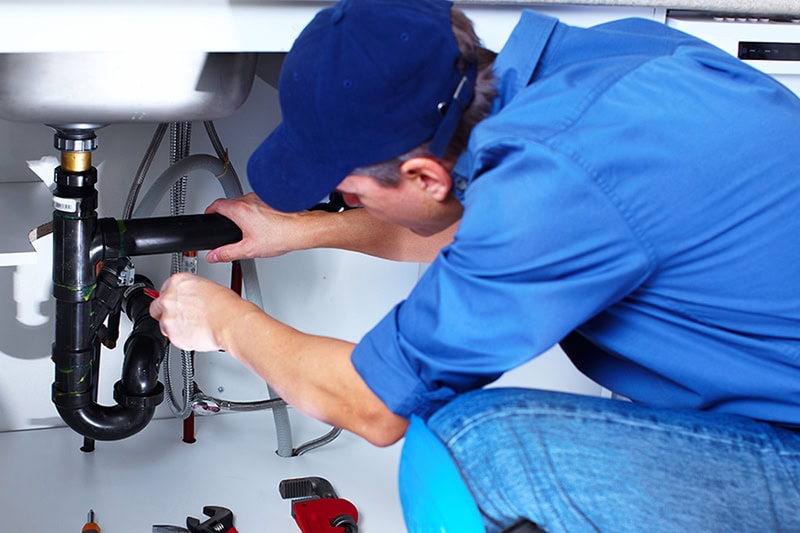

Every homeowner eventually faces the dilemma. A bathroom sink starts draining at a crawl, a valve develops a steady weep under the kitchen counter, or a toilet refuses to stop cycling water. With thousands of home-improvement videos at your fingertips and big-box hardware stores stocking aisles of push-to-connect fittings and rental augers, the urge to handle the job yourself is understandable. Tackling a repair on a Saturday afternoon can save hundreds of dollars in labor fees and deliver a genuine sense of self-reliance.
However, plumbing carries a unique risk profile compared to almost any other trade in home maintenance. If a coat of paint goes on unevenly, the consequence is purely aesthetic. If a plumbing joint fails under 60 pounds per square inch of municipal water pressure while you are away at work, the consequence is thousands of dollars in water remediation, ruined hardwood floors, and structural mold. Deciding whether to grab your adjustable wrench or pick up the phone comes down to understanding the mechanics of the task, the vulnerability of your home, and where your personal liability begins.
Low-Risk Repairs Well Suited for the DIY Homeowner
A substantial portion of residential plumbing headaches occur right at the fixture level. These issues are generally visible, easy to isolate, and governed by simple mechanical principles rather than complex fluid dynamics.
Swapping Out Exposed Fixtures and Trim
Replacing a worn showerhead, installing a new kitchen faucet, or updating a bathroom vanity sink handles falls comfortably within the reach of a careful homeowner. In these scenarios, you are working entirely downstream from dedicated fixture shutoff valves (commonly called angle stops).
Because the water can be turned off directly beneath the sink without cutting supply to the rest of the household, you can work at your own pace without pressure. As long as you clean the male threads thoroughly, apply fresh PTFE thread seal tape in a clockwise direction, and avoid stripping delicate brass or plastic threads, replacing fixture trim is one of the most cost-effective DIY projects available.
Clearing Simple, Localized Drain Clogs
When a single sink or shower slows down, the clog almost always sits within the first two or three feet of the drain. In showers, it is usually a bundle of shed hair caught on the strainer; in bathroom sinks, it is often a combination of hair and soap scum clinging to the pop-up stopper assembly or sitting inside the curved bend of the P-trap.
Clearing these obstructions requires little more than an inexpensive barbed plastic snake or a pair of slip-joint pliers to drop the trap assembly into a small bucket. Because you are clearing gravity-fed drain lines rather than dealing with pressurized supply runs, the worst-case scenario is a small spill that is easily contained with a towel and a bucket.
Rebuilding Toilet Tank Internals
Toilets are remarkably simple mechanical systems. When a toilet runs intermittently or fails to flush with sufficient power, the defect nearly always resides inside the porcelain tank, not down in the waste line. Replacing a deteriorated rubber flapper, resetting a tangled lift chain, or swapping out an entire plastic fill valve costs less than twenty dollars in parts and requires no specialty tools. So long as you remember to turn off the angle stop behind the bowl and sponge out residual water before unbolting components, this repair is an ideal weekend DIY task.
The Hidden Hazards and Common Pitfalls of DIY Work
The line between a triumphant repair and an insurance claim is often surprisingly thin. Most botched plumbing projects do not fail during installation; they fail three weeks later when an overlooked stress point finally gives way.
One of the most frequent DIY errors is over-tightening threaded connections. Homeowners often assume that if hand-tight is good, wrench-tight must be better. In reality, cranking down excessively on brass fittings, compression nuts, or PVC slip joints warps the internal rubber gaskets, strips delicate threads, and causes hairline fractures in plastic housings that slowly leak behind cabinets. Similarly, over-torquing the closet bolts that hold a toilet bowl to the floor flange will shatter the porcelain base in a split second.
Another widespread mistake involves mating incompatible materials. Threading copper directly into galvanized iron without a specialized brass transition fitting or dielectric union triggers rapid galvanic corrosion. Within a few short years, the electrochemical reaction between the two metals severely degrades the joint, leading to sudden leaks inside wall cavities.
Finally, relying on chemical drain cleaners as a shortcut around mechanical snaking remains one of the most damaging DIY habits. Highly caustic drain gels rely on intense exothermic reactions to dissolve organic debris. That generated heat frequently softens modern PVC joints, weakens vintage cast-iron bottoms, and leaves toxic chemical reservoirs sitting in the pipes for the next person who opens the drain.
Critical Situations That Require a Licensed Professional
Certain plumbing issues carry risks far too severe for amateur intervention. When a failure jeopardizes the structural integrity of your home, violates municipal health codes, or involves high-energy systems, calling a licensed, insured plumbing contractor is the only responsible course of action.
-
Pipes Concealed Within Walls, Ceilings, and Slabs: Any leak that originates behind finished drywall or underneath a concrete foundation requires professional diagnostic tools. Plumbers utilize specialized acoustic listening gear and thermal imaging cameras to locate slab leaks precisely without tearing up large sections of your home blindly. Furthermore, sweating copper fittings inside a wall stud bay demands commercial flame shields and soldering expertise to prevent accidental house fires.
-
Water Heater Replacement and Repair: Water heaters combine continuous high-pressure water with either high-voltage electric elements or combustible gas lines and exhaust flues. An improperly installed temperature and pressure relief (T&P) valve or an improperly vented gas flue poses severe risks of tank rupture or carbon monoxide poisoning. Most municipalities legally require a permit and inspection for water heater installations, which protects your home’s resale value and safety.
-
Main Sewer Lateral Backups: When multiple drains across your home back up simultaneously, or when running the washing machine causes wastewater to surge up into a ground-floor shower, the problem is not a simple hair clog. The main sewer line is obstructed by tree roots, broken bellies, or collapsed vintage clay pipe. Clearing these lines requires heavy-duty drum augers or high-pressure hydro-jetting units that can easily cause severe injury if operated without proper training.
-
Modifying Gas Supply Lines: Natural gas and propane lines fall strictly under the jurisdiction of licensed master plumbers or mechanical contractors. Even a microscopic leak in a threaded black-iron gas pipe can accumulate explosive gas volumes inside living spaces. DIY gas piping is dangerous, illegal in most jurisdictions, and will void your homeowner’s insurance policy in the event of an explosion or fire.
Evaluating the Financial Equation: Upfront Savings vs. Long-Term Liability
The primary motivator for DIY plumbing is avoiding labor costs. A professional service call typically carries a dispatch fee alongside hourly billing rates, which can make a routine repair feel expensive.
However, the cost of professional plumbing includes far more than simple wrench-turning. A licensed contractor brings workmanship warranties, specialized tooling, and commercial liability insurance. If an insured professional makes a mistake that leads to a ruptured fitting, their insurance carrier covers the repair costs and any resulting water remediation. If a homeowner installs an improper unvented drain or an unapproved fitting that fails while they are on vacation, the homeowner’s insurance company may deny the resulting claim on the grounds of unpermitted, non-code-compliant amateur modifications.
When calculating the real cost of a project, weigh the price of a professional service call against the deductible on your home insurance and the hours required to clean up fifty gallons of contaminated wastewater.
A Three-Question Framework for Every Plumbing Dilemma
Before you reach for your toolbox or head to the local hardware center, run the problem through three practical questions:
-
Can I isolate the water to just this fixture, or must the main house valve stay off? If a repair requires shutting off water to the entire household, the clock is ticking. If a bolt snaps or a replacement part is missing, your entire family is left without running water until a professional can arrive on an emergency basis.
-
If this joint fails completely overnight, where will the water travel? A minor leak inside an unfinished basement above a concrete slab carries relatively low financial exposure. The same leak situated on the second floor above an open-concept kitchen with custom cabinetry represents a massive financial catastrophe.
-
Does this job require pulling a municipal permit or cutting into structural elements? If the repair involves relocating drain stacks, tying into main gas lines, or replacing whole-home distribution systems, the work must adhere strictly to the Uniform Plumbing Code (UPC) or International Plumbing Code (IPC) and undergo formal inspection.
Knowing your limits as a homeowner is not an admission of defeat; it is an exercise in sound risk management. Reserve DIY efforts for accessible, low-pressure fixture maintenance where you can work safely and clean up easily. For everything inside the walls, under the slab, or tied to your main utility connections, hire a certified professional who carries the training, the tooling, and the insurance to guarantee the job is done right.

Comments are closed.