
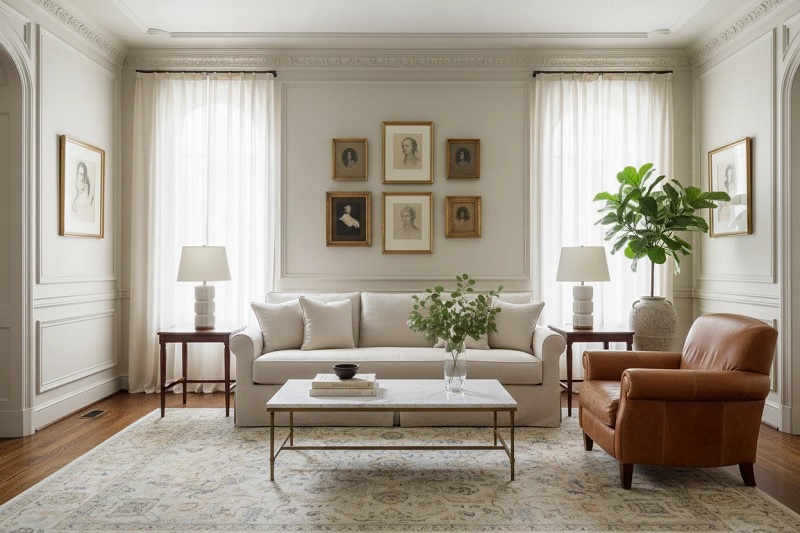

The interior design industry is dominated by a relentless cycle of micro-trends. What feels groundbreaking and fresh one year inevitably feels dated the next, leaving homeowners with spaces tied to a highly specific, fleeting era. Separating a passing fad from a permanent fixture requires an understanding of foundational visual balance. Truly timeless design does not rely on seasonal color palettes, viral social media aesthetics, or impulsive showroom purchases. It relies on architectural integrity, historical precedent, and authentic materials. By anchoring a home in one of the few design styles proven to withstand the test of time, you create an environment that remains as captivating a decade from now as it is today.
The Enduring Architecture of Traditional Design
Traditional interior design often gets unfairly categorized as stuffy or outdated, but true traditionalism is the exact opposite. Rooted heavily in 18th and 19th-century European sensibilities, this style forms the bedrock of classic residential architecture. It survives because it prioritizes order, comfort, and predictability.
Symmetry and Classical Proportions
The defining characteristic of traditional design is an unwavering commitment to symmetry. Rooms are often centered around a primary architectural focal point, such as a grand masonry fireplace or a massive bay window. Furniture is deliberately arranged in facing pairs, creating distinct, balanced conversational zones. Symmetry inherently calms the human eye, providing a subconscious sense of order and permanence. When a room is perfectly balanced, it feels inherently safe and deeply grounded, which is why this layout strategy has survived centuries of shifting tastes.
Rich Materials and Heritage Textiles
Traditional spaces do not shy away from visual weight. This style embraces dark, polished woods like mahogany, cherry, and walnut, which ground the room with a sense of history. Textiles play an equally vital role, utilizing heavy, luxurious fabrics such as silk, velvet, and damask for window treatments and upholstery. The floors are almost universally anchored by hand-knotted Persian or Oriental rugs. Because these elements require immense craftsmanship to produce, they naturally command respect and age with an undeniable grace that synthetic, mass-produced furnishings simply cannot replicate.
Mid-Century Modern: The Triumph of Form and Function
Emerging in the post-World War II era, Mid-Century Modernism completely disrupted the heavy, ornate aesthetics of the past. It introduced a radical new philosophy where the function of a piece dictated its visual form. Despite being born in the 1950s, this style remains one of the most highly sought-after aesthetics in contemporary luxury real estate.
Organic Geometry and Uncluttered Horizons
Mid-Century Modern design is defined by its clean, unadorned lines and its seamless integration with the natural world. Furniture from this era sits low to the ground, maintaining clear, uncluttered sightlines across the room. The pieces often feature a striking contrast between sharp, geometric angles and smooth, organic curves.
The absolute refusal to compromise functionality for the sake of ornamentation is what keeps this style relevant. A classic Mid-Century teak credenza or a molded plywood lounge chair looks incredibly sleek, but it is also exceptionally practical and comfortable. By prioritizing the structural beauty of materials like walnut, fiberglass, and leather over applied decorative trims, Mid-Century Modernism achieved a minimalist purity that never feels stark or uninviting.
Scandinavian Minimalism: The Warmth of Restraint
While extreme, clinical minimalism often feels cold and unlivable, Scandinavian minimalism strikes a masterful balance. Originating in Nordic countries where winters are brutally long and natural light is incredibly scarce, this design philosophy was engineered out of absolute necessity to maximize light and foster indoor warmth.
Light, Texture, and Natural Wood
The Scandinavian palette is overwhelmingly light, relying on crisp whites, soft grays, and muted earth tones to bounce whatever natural light is available deep into the room. To prevent the space from feeling sterile, Scandinavian design relies heavily on tactile layering. Instead of adding visual interest through complex patterns or loud colors, this style introduces warmth through heavy texture. Think chunky wool throws, draped sheepskins, and nubby linen upholstery.
Wood tones in Scandinavian interiors are distinctly light, favoring bleached oak, white pine, and ash. The furniture features tapered legs and slender profiles, ensuring the room feels airy and breathable. This style endures because it promotes a deep sense of psychological calm. A Scandinavian room is designed to be an uncluttered sanctuary from the chaos of the outside world, a desire that remains universally relevant across all generations.
Transitional Design: The Masterful Middle Ground
For homeowners who find traditional design too heavy but consider modernism too severe, transitional design offers the perfect, timeless compromise. Transitional interiors effortlessly bridge the gap between the antique and the contemporary, resulting in spaces that feel both highly curated and deeply comfortable. It is currently the prevailing aesthetic in high-end residential construction because of its extraordinary versatility.
Balancing the Antique with the Contemporary
The genius of transitional design lies in the art of the mix. It takes the structural reliability and comfort of traditional furniture and strips away the fussy, ornate detailing. You might find a classic roll-arm sofa, but it will be upholstered in a crisp, solid performance linen rather than a heavy floral damask.
This style thrives on juxtaposition. Pairing a sleek, modern glass coffee table with a century-old distressed Oushak rug creates a dynamic visual tension that prevents the room from feeling like a static museum exhibit. The color palettes are strictly controlled, relying on warm neutrals like greige, taupe, and charcoal to unify the disparate eras of furniture. Because transitional design is inherently flexible, it can easily absorb new pieces over time without disrupting the foundational aesthetic of the home.
The Core Principles of a Timeless Foundation
Regardless of whether you lean toward the heavy symmetry of traditionalism or the airy restraint of Scandinavian design, all timeless spaces share a few non-negotiable architectural and material philosophies.
The most critical factor is a relentless dedication to authentic materials. The modern marketplace is flooded with highly convincing synthetic replicas, but fake materials do not age; they only degrade. A solid marble countertop will gracefully etch and acquire a beautiful patina over a century, whereas a printed quartz or laminate will eventually scratch, peel, and look profoundly cheap. Unlacquered brass hardware will darken and burnish with the natural oils from human hands, while fake gold plating will quickly flake off to reveal the composite metal beneath. Timeless design is an investment in materials that improve with friction, use, and the passage of time.
Furthermore, timeless homes utilize the architectural envelope—the walls, the ceilings, and the floors—as a quiet backdrop rather than the main event. By painting walls in complex, shifting neutrals and installing solid hardwood floors, you create a blank, high-quality canvas. The personality, the color, and the era of the room are dictated by the art, the rugs, and the upholstery, all of which can be updated as your personal tastes evolve. Designing a timeless home is not about rejecting modern advancements; it is about recognizing that quality craftsmanship, balanced proportions, and authentic materials will never go out of style.

Comments are closed.